Real Bus Simulator : Bus Games
Solo Studio IncStrategy
4.768.00 Reviews
- Version
- 7.1
- Installs
- 50.00M
- Age Rating
- Everyone
Screenshots
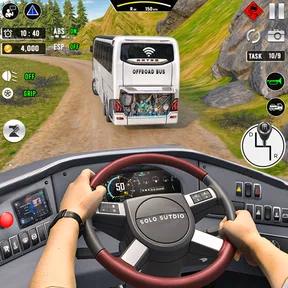
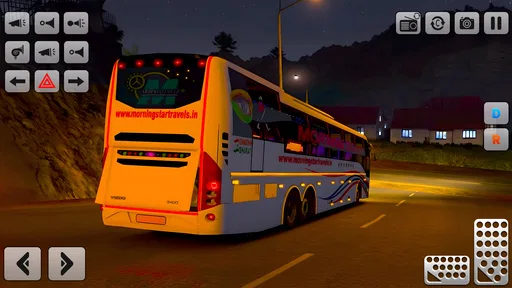
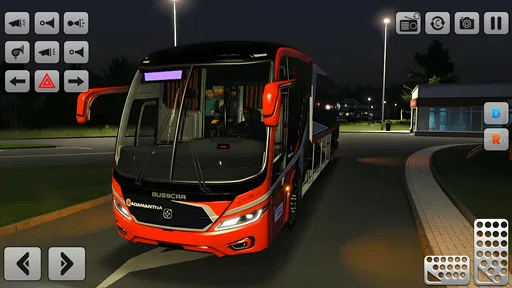
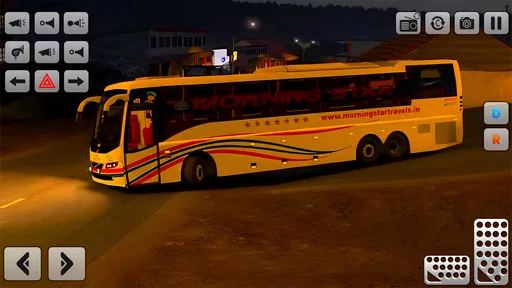
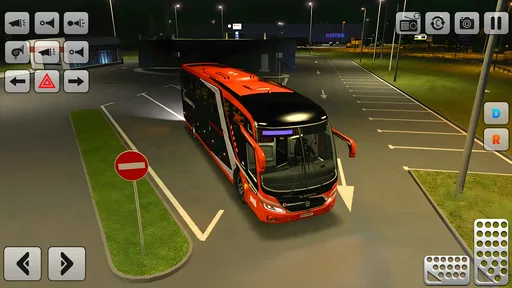
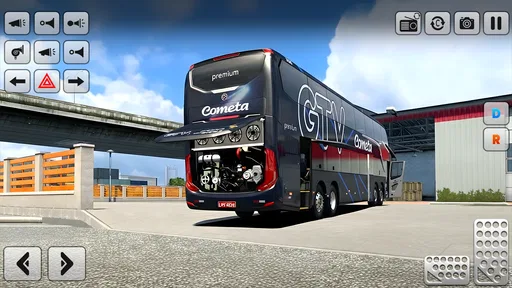
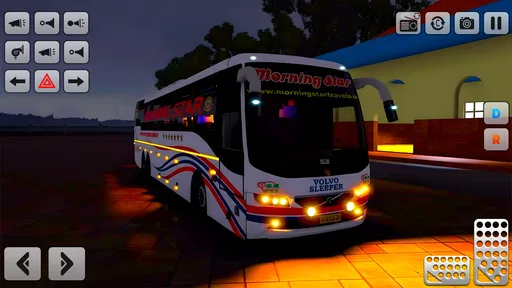
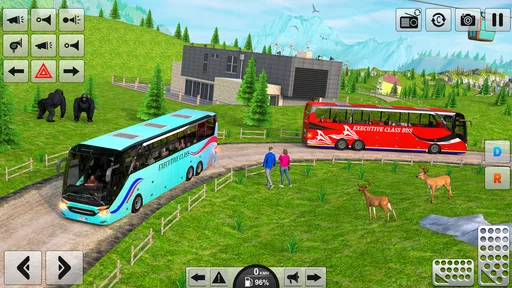
Our Review of Real Bus Simulator : Bus Games
 Analysis by Appyee
I approached Real Bus Simulator: Bus Games expecting a straightforward driving game, but its appeal comes from the small decisions that sit between starting a route and finishing it cleanly. It is a free strategy game from Solo Studio Inc, designed around the idea of handling a coach bus rather than simply racing from one checkpoint to another. That difference matters: success feels less like chasing a high score and more like keeping control, reading the road, and avoiding the kind of mistake that turns an ordinary trip into a messy one.
The game is available to players of all ages, and it runs on Android devices using version 6.0 or later. It has attracted over 50 million installs, while its average rating sits at 3.4 from around 52 thousand ratings. Those figures suggest a broad audience but also a divided response, which matches my experience. There is an accessible driving idea here, yet the enjoyment depends heavily on whether you want a relaxed bus-driving challenge or a polished, deeply simulated transport game.
How the driving decisions shape each route
The first thing I noticed is that the bus itself changes how I approach movement. A coach is not as forgiving as a small car in a driving game. Turning too quickly, entering a narrow section without preparing, or treating every road like an open racing line can make a route feel harder than it initially appears. I found myself planning a few seconds ahead instead of reacting at the last moment.
That creates the main decision space. You are not only asking where to go; you are deciding how much room to leave, when to slow down, and whether a safer line is worth taking even if it makes the journey feel slower. The game’s central attraction is this shift in mindset. A player who treats it as an arcade racer may become frustrated, while someone who enjoys controlled movement can settle into a useful rhythm.
I recommend beginning with deliberate inputs rather than trying to prove speed immediately. Keep turns wide, brake before the point where you think braking is necessary, and use early corrections instead of dramatic steering. This is one of the less obvious ways to improve: smoothness gives you more time to recover. A late correction can create a chain of problems, while a small adjustment usually keeps the bus manageable.
The route experience also works well for short sessions. I can imagine playing while waiting for an appointment, completing a few drives, and putting the phone away without needing a long campaign commitment. It is not the kind of game that demands a large uninterrupted block of time to understand its basic appeal. That makes it approachable for casual players who like vehicle games but do not want a complicated management interface.
At the same time, the straightforward structure may disappoint players looking for a broad transport-management layer. The focus is on driving the bus and learning bus-game skills, not on building a company, arranging a fleet, or balancing a detailed timetable. If your preferred strategy games are about long-term economic planning, this title offers a much narrower form of decision-making.
Why preparation matters more than speed
My most useful habit was to treat every difficult section as a preparation problem. Instead of waiting for the bus to become awkward, I reduced speed before the turn and positioned the vehicle early. This sounds simple, but it changes the entire feel of play. The game becomes less about rescuing a bad approach and more about creating a good one.
That approach is especially helpful on a phone, where touch controls can make tiny corrections less precise than they would be with a physical controller. I found that short, measured inputs were easier to repeat than holding a direction for too long. Players who are used to fast swiping may need a few attempts to develop that restraint.
There is also a practical reason not to rush: a bus takes up more visual and mental space than a compact vehicle. When I focused only on the immediate obstacle, I was more likely to enter the next section badly. Looking beyond the current turn helped me choose a better line. This is a genuine strategy lesson rather than a generic driving tip: the best move often happens before the moment that appears dangerous.
For a beginner, I would use the first sessions to learn how much steering and braking the bus needs, not to chase perfect results. Once the controls feel familiar, start judging each route by consistency. Finishing several drives without a major mistake is more valuable than one fast attempt followed by repeated failures.
Risk, reward, and the cost of a hurried move
The risk-and-reward balance is modest but meaningful. Taking a more direct or faster approach can make a route feel efficient, yet it leaves less room to correct an error. A cautious line may seem boring, but it protects the entire run. I generally preferred preserving control over saving a small amount of time, particularly when the road became tight or the bus was already moving awkwardly.
This is where the game differs from many casual driving titles. In a pure racing game, aggressive movement is usually rewarded because speed is the central objective. Here, aggressive movement can be self-defeating. The reward is not only reaching the next point quickly; it is reaching it with the bus still under control.
One useful trade-off is to separate experimentation from serious attempts. On an early run, I would test how sharply the bus could turn or how quickly it responded to braking. On the next run, I could use that knowledge more carefully. Mixing experimentation with a route where I wanted a clean result often led to avoidable mistakes.
The free entry point makes this learning process easier to accept. I can try the game without paying upfront, and optional purchases cost $0.99 per item. That price structure means the basic decision to test the game is low risk, although players who dislike in-app purchases should still keep that possibility in mind. I would not recommend spending simply to overcome impatience; the core improvement comes from learning the controls and planning better.
Another practical scenario is playing during a quiet evening when you want something active but not overwhelming. I found the driving more satisfying when I treated it as a concentration exercise. It can fill a short break, but it also works as a calm wind-down activity if you enjoy repeating a route to improve your handling.
Adapting when the first plan goes wrong
No driving plan survives every situation, so adaptation becomes more important than perfection. When I entered a turn too quickly, the best response was not to make a huge steering movement. I tried to reduce the problem gradually, regain a stable line, and accept that the route might take longer. That choice often rescued the attempt.
This is a useful counterpoint to the instinct to restart immediately. Restarting can be sensible when a mistake has made the route impossible, but restarting every time something goes slightly wrong prevents you from learning how to recover. I gained more from allowing imperfect runs to continue. Recovery teaches you what the bus can still do after a poor decision.
Players should also adapt their expectations to the device they use. On a smaller screen, visual information may feel more compressed, so I would avoid playing with unnecessary distractions around the display. If the phone feels unresponsive, the problem may be less about strategy and more about trying to make overly long inputs. Shorter commands gave me better control.
The game is also better suited to people who enjoy gradual improvement than to players who need constant novelty. Its driving premise is clear from the beginning. The challenge comes from applying the idea more consistently, not from discovering a completely different genre every few minutes. That can be satisfying, but it also explains why some players may find the experience repetitive.
For younger players, the Everyone rating makes the game broadly approachable, and the driving theme is easy to understand without a complicated story. I would still suggest that parents keep an eye on optional purchases, especially on a shared device. The game itself is simple to pick up, but the purchase option is something worth managing before handing over the phone.
What remains interesting after the first few sessions
The depth here is practical rather than expansive. I did not come away thinking that this was a full transport simulation with layers of business management. Instead, its longer-term value comes from refining habits: entering turns with better positioning, using less frantic steering, and recovering from mistakes without losing control.
That kind of depth can be easy to underestimate. A game does not need a large collection of systems to reward attention. In this case, the planning horizon is short but important. I usually thought a few seconds ahead, especially when approaching a turn or a narrow passage. The game asks for immediate judgment, yet the strongest decisions are made before the obstacle is directly in front of the bus.
There is a trade-off between accessibility and realism. The simple premise makes it easy for a new player to understand what to do, but players seeking detailed vehicle behavior, extensive route design, or a complex progression system may want a more specialized simulator. Real Bus Simulator: Bus Games is more approachable than a serious simulation, but that accessibility limits how far its strategic layer can develop.
Compared with ordinary racing games, it offers a slower and more controlled alternative. Compared with management-focused strategy games, it gives you direct responsibility for the vehicle rather than a distant view of a transport network. That middle position is its clearest identity. It is for someone who wants to feel involved in the route without having to manage every part of a bus company.
The current version is 6.5, and the game was released on August 28, 2023. I mention those details because they help place the experience in context: this is an established mobile title with a large install base, not a tiny experimental release. Still, the average rating shows that popularity does not guarantee universal satisfaction. I would treat the game as something to try personally rather than assuming that its reach means it will suit every driving fan.
One advanced habit I recommend is reviewing the reason for each failure instead of labeling the entire route as difficult. Was the bus already too fast before the turn? Did you steer late? Did you focus on the obstacle and ignore what came after it? Asking those questions turns repetition into practice. Without that reflection, repeated attempts can feel like random trial and error.
Who should play it, and who should choose something else
I think this game is a good fit for casual players who like buses, driving challenges, and short strategy decisions. It is also suitable for someone who wants to practice patience in a game without learning a large ruleset. The free price makes it easy to sample, and the Everyone rating keeps the presentation broadly accessible.
I would be more cautious recommending it to players who expect highly detailed simulation. If you want realistic fleet operations, extensive customization, competitive racing, or a large economic campaign, this is probably not the right destination. A dedicated simulator or a deeper management game would serve those preferences better.
It may also be a poor match for anyone who dislikes repetition. The satisfaction comes from improving your approach to driving, so players who need constant new objectives may stop enjoying it once the basic controls become familiar. Likewise, if you prefer instant acceleration and dramatic action, the deliberate pace may feel slow rather than strategic.
For a friend deciding whether to install it, I would say this: try it if the idea of carefully guiding a coach bus sounds more appealing than racing one. Give it several attempts before judging the controls, and do not measure the game only by speed. If you want a deep simulation or a management-heavy strategy experience, save your time for a more specialized alternative.
My strategy verdict
Real Bus Simulator: Bus Games succeeds when I approach it as a compact exercise in planning, control, and recovery. Its strongest quality is the way a large vehicle makes ordinary turns and corrections feel meaningful. I enjoy the moments when a route goes smoothly because I prepared early rather than because I reacted heroically.
Its limitations are just as clear. The strategic layer is focused on driving decisions, so it does not replace a full transport-management game. The experience can become repetitive, and the moderate 3.4 average rating reflects that it will not satisfy everyone. Optional purchases are available at $0.99 per item, although the free entry point makes trying it straightforward.
My final recommendation is measured but positive. Install it if you want a free bus-driving game with a strategy flavor, especially if you enjoy learning through repetition and prefer controlled movement to frantic racing. Start slowly, plan turns before reaching them, and treat mistakes as information. Those habits reveal the best part of the game: not the fantasy of driving a bus, but the small decisions required to keep one moving safely from one part of a route to the next.
Privacy and Permissions
See what permissions an app requests and how it handles your data.
- Other
- view network connections, full network access, prevent device from sleeping
Verdict
Strengths of Real Bus Simulator : Bus Games
- Realistic bus controls make driving feel immersive.
- Multiple routes and buses provide variety between trips.
- Traffic and weather conditions add challenge to each journey.
- Simple interface makes the game easy for beginners to understand.
- Offline play lets you drive without a constant internet connection.
Limitations of Real Bus Simulator : Bus Games
- Frequent ads may interrupt gameplay between routes.
- Some buses and upgrades require lengthy progress or purchases.
- Graphics can look dated on newer phones and tablets.
- Large vehicles may feel difficult to control in narrow streets.
- Performance may drop on older or budget devices.
Similar Picks in This Category
View All
Clash of Clans
Supercell4.5

Plants vs. Zombies™
ELECTRONIC ARTS3.7

Lords Mobile: Kingdom Wars
IGG.COM4.5

Clash Royale
Supercell4.4

State.io — Conquer the World
CASUAL AZUR GAMES4.1

Car Driving School : Car Games
Spark Game Studios3.9
Frequently Asked Questions
What is Real Bus Simulator: Bus Games about?
Real Bus Simulator: Bus Games is a driving and management game focused on operating passenger buses in different environments. Players typically pick up and drop off passengers, follow routes, manage traffic, and complete missions while trying to drive safely. The game combines realistic-style bus controls with challenges such as tight roads, city traffic, parking, and time-based objectives.
Can I play Real Bus Simulator: Bus Games without an internet connection?
The game may support offline play for its main driving missions, but some features can depend on an internet connection. Advertising, optional rewards, updates, online events, or purchases may require access to the internet. Availability can also vary between versions, so it is best to launch the game once while connected and check which modes remain available after switching to airplane mode.
Is Real Bus Simulator: Bus Games free to download and play?
Real Bus Simulator: Bus Games is generally offered as a free download, allowing players to try its basic gameplay without paying upfront. However, free mobile games commonly include advertisements and optional in-app purchases, such as currency, vehicle upgrades, or ad removal. Before downloading, check the store listing for the latest pricing details and review purchase settings if children use the device.
What devices are compatible with Real Bus Simulator: Bus Games?
Compatibility depends on the specific Android or iOS version available in your region, as well as the requirements listed on the official app store page. The game should run on many modern smartphones and tablets, but older devices may experience slower loading, reduced graphics quality, or occasional stuttering. Make sure your device has enough free storage and install system updates before playing.
Does the game offer realistic controls and bus customization?
The game is designed to provide a bus-driving experience with controls such as steering, acceleration, braking, camera views, and sometimes indicators or other driving options. Depending on the version, players may unlock different buses, improve performance, and change visual details through progression. New players should begin with easier routes and adjust sensitivity or control layouts before attempting difficult traffic and parking challenges.
Play our best games!


